The date is March 1949, the birthdate of a guy who would later make his mark in the music world as a one-hit wonder, thanks to another Wonder. So let’s TCB.
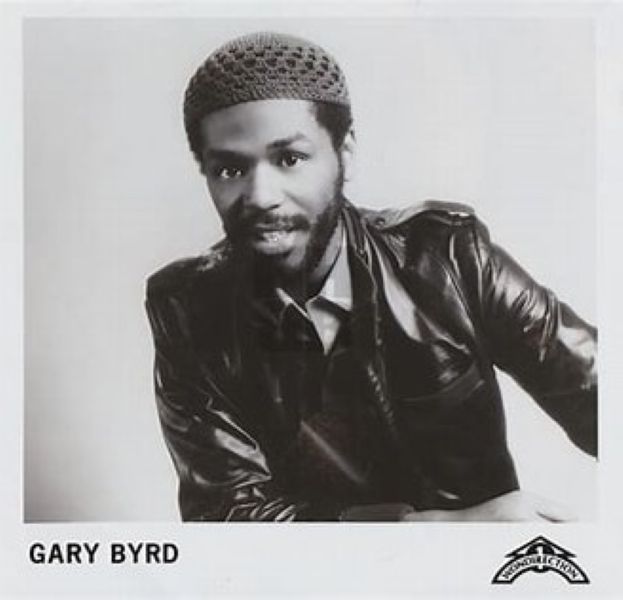 The first single to be released on Stevie Wonder’s Wondirection label was Gary Byrd & The GB Experience’s rap “(You Wear) The Crown” in June/July 1983. Stevie launched the short-lived label in 1981, and the 12″ ten minute-plus track, marketed and distributed by Motown, was also available as a ‘special long mix’, and over here in the UK, on a chrome cassette (aptly called ‘the chrome dioxide blaster’). Teena Marie, Syreeta and Andre Crouch were among the featured backing vocalists while Stevie played piano, drums, synthesizers, tambourines and wood blocks.
Sadly it was a one-off on Motown, even though its high sales figures indicated a follow-up would also sell well. We can’t change that, but we can remind ourselves of how this rather unusual single came about and by whom. So what follows are snippets from the chat I had with Gary Byrd back in the day at his London hotel, while he was taking a break from his BBC programme. Such an easy going guy, and talked easily about his life. Damned if I can find the photo taken at the time.
A native of Buffalo, New York, Gary, born 14 March 1949, once described himself as a ‘communicator’ and not an ‘entertainer’. As a youngster he became a public speaker in high school and this stood him in good stead to become a radio presenter which he did at the age of fifteen, having been discovered and mentored by Hank Cameron, a broadcaster-educator.
At sixteen years old, he began a three-year spell on Buffalo’s local radio station, and within a year had his own show on WUFO, and was exposed to rapping DJs compiling poems to a musical beat. As there were no Buffalo rappers, Gary collected tapes of Baltimore’s Maurice ‘Hotrod’ Hulbert, and New York’s Jocko Henderson to formulate his own style while playing funk, soul and gospel music.
With practice he became a successful rapper which took him to New York to join WWRL, a black-orientated station where his style of introducing mini-raps over record introductions became popular with listeners. In time, he expanded his spoken repertoire with social and political verse. His work didn’t go unnoticed because Gary later met a Motown star who was to turn his life around: “I first met up with Stevie Wonder in Buffalo. I know he made an impression on me and I guess I made some kind of impression on him because the friendship lasted.” Stevie was impressed with Gary’s genius lyrics and they decided to work together on a trio of songs then and there. But it turned out to be years later when they actually did that.
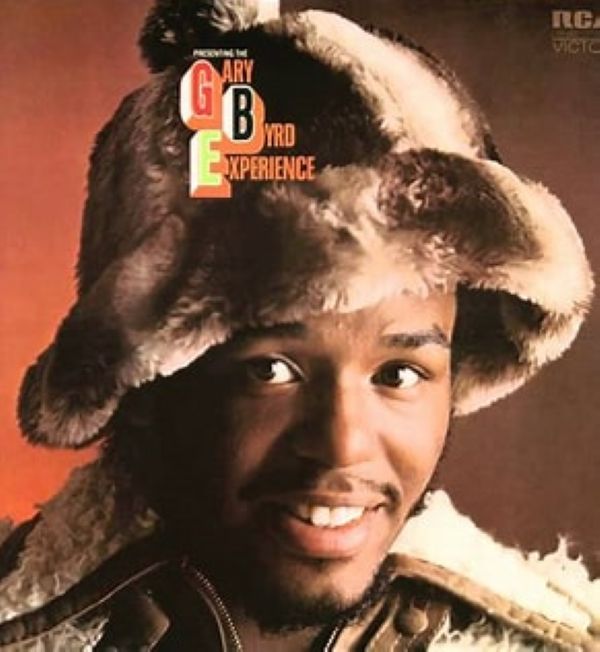 Gary’s life moved on. During 1971, he wrote and recorded his first single, a funk-with-a-message rap record called “Every Brother Ain’t A Brother” on the Real Thing label. He had read the poem on his show “The GBE: Gary Byrd Experience” and such was the positive audience reaction that he put the words to music and released it. He then recorded the “Presenting The Gary Byrd Experience” album for RCA, where some of the sleeve notes read, “The brilliant clarity, the aptness in the blend of music and message made Gary Byrd’s record warm listening.” Tracks included “Black Is So Beautiful” and “Shining Black Prince”. I’m a little confused as to what “warm listening” means, and as I haven’t heard the album, I can’t throw any light on the feeling.
Anyway, moving on: in 1974 his “Soul Travellin’ (Inside The G.B.E.)” (which was sampled on “Jazzie’s Groove” by Soul II Soul” in 1989) was released, the same year as Gary wrote Millie Jackson’s “I Cry” track for her “Hurt So Bad” album. What a fabulous album that is too – and that is “warm listening”. Well, it made me rather hot under the collar!
Three years on, the radio presenter-cum-rapper met up again with Stevie to write the lyrics for two songs “Village Ghetto Land” and “Black Man” for Stevie’s pending “Songs In The Key Of Life” album. due for release in 1976: “He called me and had me listen to a track over the phone. It was to be ‘Village Ghetto Land’ and it sounded more like a composition by Bach or Beethoven. Stevie told me he wanted it to be about all kinds of ghettos. I kept working on it, and then the day I finished it I let him hear it over the phone and he told me he needed another verse and would call back in another fifteen minutes for it!”
Of the track “Black Man,” Gary remembered: “It wasn’t just about a black man, but more about the contributions that people have made to the world we live in, like a documentary. It took four weeks to research the song.” The final result was an awesome musical adventure, so it came as no surprise when “Songs In The Key Of Life” scooped five Grammy awards.
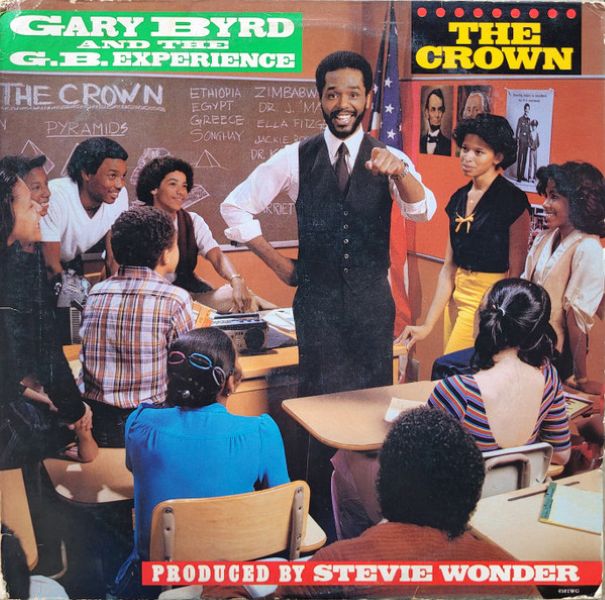 So to his own hit single. Gary began writing “(You Wear) The Crown” during 1979 but it wasn’t until two years later that Stevie heard his completed lyrics and insisted he write the music. Gary recalled the conversation: “I played it to Stevie over the phone and he told me to fly to Los Angeles to record it with him. Stevie laid down the backing track quickly and I did the vocals, and the company were excited about releasing it. I couldn’t believe Stevie was so satisfied because all his songs go through a long evolutionary process.” Not only did he lay down the backing track but sang a verse with Crystal Blake, a noted singer and one-time member of Atlantic Starr.
Mr Byrd’s lyrics ran through two successive dimensions: his interest in African history and knowledge he’d learned from motivational literature. His wide-ranging historical narrative of human progress, beginning with the ancient Egyptians to the present day carried an emphasis on African heritage. He explained after the single’s release, “My main mission is to expand people’s consciousness because what I dislike most is the world’s ignorance. Not ignorant people necessarily, but what ignorance does to people. So, if there’s a way through art to help eliminate that, then that’s what I intend to do.”
A reviewer glowed with enthusiasm: “tight pumping rhythm, dominant flowing rap from Gary, a typically sparkling vocal passage from Stevie, and a decidedly catchy chorus from the vocal choir.” The rap single surprised a lot of people by racing to number six in the UK chart during July 1983. Quite an achievement for a 12″ single. “It was a totally different story in America because nothing happened of any consequence,” sighed Gary during our chat. Nonetheless, he remained upbeat about the success, saying “The idea is not that black, white or anyone is better, but that we all have our place. We’ve all made contributions and mistakes too. Wearing the crown is reaching the top of your potential. You could be a writer or you could be a mechanic, but you can still wear the crown.”
The problem with American sales seemed to stem from the single’s release coinciding with Motown being sold to MCA, and Wondirection, a small label by comparison, was overlooked. Gary and Stevie hooked up again to work on “Dark ‘N’ Lovely”, a track on Stevie’s 1987 “Characters” album which followed “In Square Circle”. A tribute to the end of the anti-apartheid movement in South Africa, “Dark ‘N’ Lovely” was one of the highlights on Stevie’s album. It’s also thought Gary worked on “Misrepresented People” for the soundtrack of Spike Lee’s film “Bamboozled” but I can only find Stevie’s name on the record label. However, I think he had a fleeting role in the movie by playing a radio talk show host.
As an aside here. Gary’s interest in Egyptian history was fuelled by Dr Yosef Ben-Jochannan, an Egyptologist. He taught his students that the ancient Egyptians who had shaped human civilization were black-skinned Africans. His teachings led to Gary visiting Egypt during the mid-eighties, where, at a certain point along the Nile, he had a spiritual experience. He said that ritual gave him “something to aspire to every day of my life, a new place to step to.” The name he chose was Imhotep, after the legendary Egyptian first multi-genius.
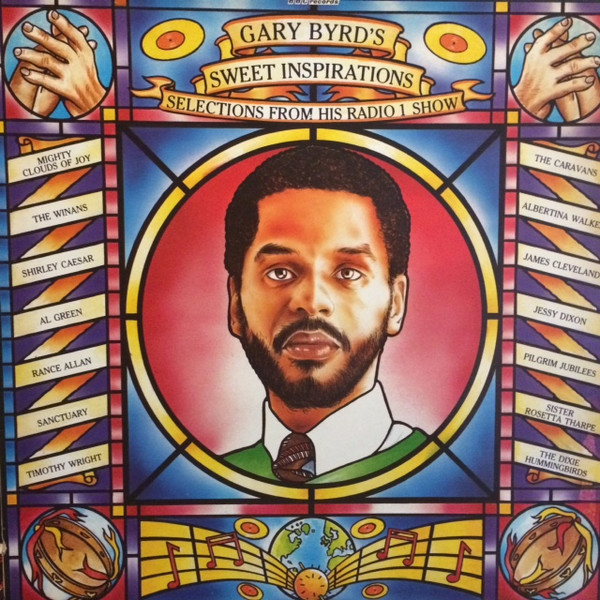 Back to radio presenting with the “Sweet Inspirations” programme on BBC Radio One. The Sunday evening show ran from 11pm to midnight, to feature soul and gospel music, often from artists who were Gary’s personal favourites. So successful was this series that BBC Records released the “Sweet Inspirations” album in 1984 with artists like Shirley Caesar, Al Green and Sister Rosetta Stone, while his BBC television special with Gil Scott Heron and James Brown earned national awards. Oops, nearly forgot, James Brown dedicated the song “Mind Power” from his “The Payback” album to Gary.
So that’s about it. This extraordinary man – poet, songwriter, recording artist and producer, writer and community activist – only really came to our notice via a single with lyrics that included “It’s not Star Wars, not Superman. It’s not the story of the Ku Klux Klan. The crown will appear in the GBE, but it’s never seen on your TV”. Having reminded myself of the lyrics. Mmm… they could, I guess, be construed as pretty heavy stuff for the eighties.
Now, well into his seventies, Gary is still active by writing a weekly arts and entertainment column – “Imhotep’s Guide To Black Events” – for one of America’s oldest African-American newspapers, while his “Express Yourself” broadcasts are available on various media platforms.
And finally… Following mixed reactions to Bruce Willis last month, the devil in me wants to mention that actor/comedian Eddie Murphy also recorded for Motown in 1993. As a lead up to this, his “How Could It Be” album on Columbia included the Rick James’ produced “Party All The Time”, and a pair of Stevie Wonder-penned and produced tracks, “Do I” and “Everything’s Coming Up Roses”. Following a second Columbia album, “So Happy” Eddie headed for Motown to release “Love’s Alright”, recorded at the Wonderland Studios. With its very pretty cover, the album was a critical and commercial failure.
Oh…and happy 82nd birthday Diana Ross on 26 March!
Sharon Davis
;