I cringe every year when 1 April arrives as it brings home with a mighty heart thump that we lost Marvin Gaye at the hands of his father. I remember that fateful day in 1984 because I was at home in Uckfield, East Sussex, visiting my parents. My dad (never one to mince words) chanced to be watching the news on television and called upstairs to me “You’d better come down and see this. It’s one of yours.” I raced down the stairs to watch the tv screen showing a body, covered with a sheet, being wheeled by paramedics to a waiting ambulance.
 In a complete state of shock, I phoned the first person who came to mind – London DJ and friend of Marvin’s, Graham “Fatman” Canter. Yes, Graham confirmed it to be true. Then I received calls from the media, asking for details, inside stuff and the usual unsavoury comments attached to a celebrity death. There was nothing I could tell them, and probably wouldn’t have anyway because some things are personal, and best left unsaid. Details of the tragedy began to leak through into the world arena; they were sketchy and misleading at first. Comments about a family argument, gun fire, father shooting son were precariously spoken about until the harrowing report in its full horror was pieced together for the digestion of a disbelieving public. So, what follows is a type of road map of events, which I wrote in the late eighties.
Smokey Robinson was on his way home from a golfing session when he heard the news. “This bulletin came on. They interrupted the programme I was listening to and said the singer Marvin Gaye was fatally shot and was admitted to some hospital. So I immediately got out of my car and went to the phone booth. I started to make some calls to find out what had happened. I reached Anna and she told me he was dead and that his father had shot him over an argument they’d had. It was such a shocking thing to be confronted with.”
Between 8am and 8.30am on Sunday, 1 April 1984 – the day before Marvin’s forty-fifth birthday – and in the Gay home on the 2100 block of Gramercy Place in the Crenshaw district of Los Angeles, Marvin’s mum, Alberta, was having a conversation with her son in an upstairs bedroom. Her husband was downstairs searching for some insurance documents which should have been posted, or which had arrived in the post. His search had been fruitless, so he called upstairs to his wife for help.
A screaming match ensued, which prompted Marvin to shout that he should stop yelling at his mother and to join them upstairs. Gay Sr. eventually climbed up the stairs, when Marvin told him in no uncertain terms that he resented the manner in which he had spoken to his mother. A further altercation began between the two men until Marvin told his father to return downstairs. He refused to budge, whereupon a further pushing match began in the bedroom before moving to the hall outside. Alberta tried in vain to separate the two men. When she achieved her goal, her husband marched off downstairs, leaving her and Marvin to return to the bedroom. Within minutes, Gay Sr. returned carrying a .38 calibre handgun.
Before I go any further, I should explain that when I was researching my I Heard It Through The Grapevine book, published in 1991, several people were involved in providing information, ranging from the Los Angeles Herald Examiner, Margaret Douglas of the Los Angeles Daily News, and Lt. Robert Martin, who headed the police investigation for the Los Angeles Police Department, to friends and colleagues. As some of the reports differed, I thought it best to let readers decide which were credible or not; it wasn’t my job to confirm what occurred in that bedroom because I wasn’t there.
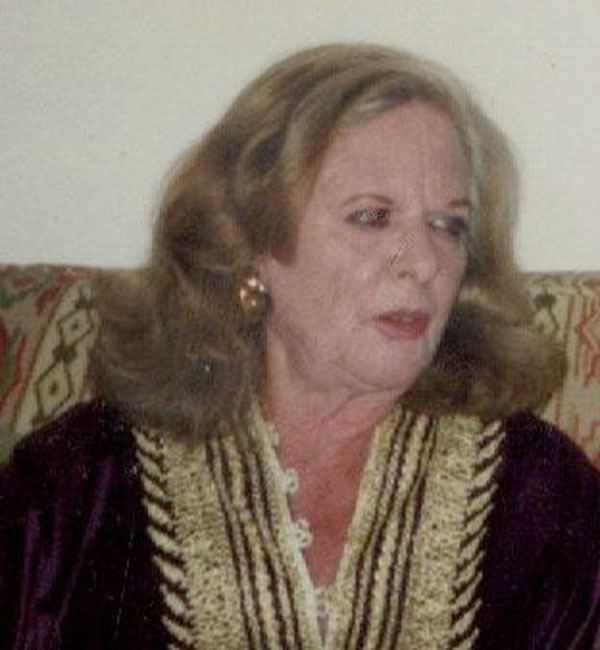 During Marvin’s sojourn in London, you may remember he met Lady Edith Foxwell, a member of the British aristocracy and a prominent, well-respected figure in London’s society and tireless charity worker. She was also part owner of The Embassy Club in London’s Mayfair which boasted a high celebrity status. The two first met at the opening of another prestigious club, Cheeks, in the East End. Lady Edith told me, “On arrival I was asked have you met your other celebrity guest and I asked who it was. Marvin Gaye. Well, I’d heard of him of course but had never met him. So we were introduced in the pitch black. I couldn’t see one single thing. We had to give prizes for something that I’ve now forgotten, and I asked him if he’d like to come back to The Embassy with me. He said it sounded good and we sailed off. What I hadn’t realised was that a whole lot of people had come with him, including his bodyguard called Cool Black. So we all went back to The Embassy.”
I chanced to be talking to a dear friend of mine one evening about how frustrated I was at not being able to talk to somebody-in-the-know about Marvin’s horrible death. This made her think of Lady Edith, whom she had known for some time, and who agreed to meet up with me to talk about Marvin. I could not believe my good fortune. So, on this sunny afternoon (strange the things you remember, isn’t it?) we sat on a couch in my bestie’s St John’s Wood apartment, drinking tea, with finger cakes on the side. Isn’t it wonderful how the brain works. I can actually now see myself in that lounge, facing the open French doors through to the garden, feeling quite a home firing questions at a member of the aristocracy.
Marvin and Lady Edith gradually developed a close friendship – the singer and the aristocrat – and she soon realised that he was desperate to find someone he could trust sufficiently to confide in. “I don’t know if he trusted me, maybe he did. We got on terribly well and I honestly don’t know why. I liked him a lot, he was a very sweet person. He was also a very sad person, had a very sad quality. He wasn’t stupid, he was a very deep thinker. And he used to tell me all about his problems, his troubles, his marriages that had gone wrong, and his family life.”
 Every so often Marvin felt London was hemming him in, yet he was out clubbing or being entertained most evenings at somebody else’s expense, while his son Bubby was looked after by someone who was in the singer’s life at the time, so he headed for Lady Edith’s family residence in Sherston, Warwickshire. In typical fashion, the singer wouldn’t travel alone, so Lady Edith was forced to entertain his rapidly expanding entourage. Remembering their first visit, she said, “They were coming at one o’clock for lunch. Eventually, after numerous phone calls, they turned up at nine at night. There were about six of them including his son….they all stayed, and then sort of eased their way back to London. Marvin came down numerous times because he loved it there. He liked the ambience.”
Back to the Gramercy Place home, with Marvin’s father returning upstairs carrying a handgun. With assistance from Lady Edith and The Los Angeles Herald Examiner it was reported that Gay Sr. entered a guest bedroom which was being used by Marvin. His wife Alberta was sitting on the bed and Marvin was in bed. The argument between father and son became aggressive, with Gay Sr. saying, “He took me from the back and he grabbed me and slung me to the floor and he started beating me, kicking me. He knocked me on the bed, and when I fell my hand happened to feel the little gun under the pillow. Marvin was the very one that put that gun (there) four months ago. When he came home, he was always paranoid that someone was going to kill him… that’s one of the reasons he gave me the little gun – for protection.”
Gay Sr. aimed the gun at his son, and in his wife’s presence, fired a single shot. The bullet hit Marvin near his heart. A second bullet hit his left shoulder. Marvin slumped off the bed onto the floor, in a sitting position, with his head back on the bed. Gay Sr. took a couple of steps forward and fired another shot at almost point-blank range, then left. He said nothing. He walked downstairs, out into the garden where he threw the gun into some nearby bushes before sitting impassively on the front porch. Upstairs, Marvin lay dying in a pool of blood as his screaming mother raced downstairs through the garden to her son Frankie’s house next door. It then appeared she returned to her son while Frankie phoned for the police and paramedics, then he too joined his mother and brother.
When the police and paramedics arrived, the scene was inevitably one of chaos and confusion. Lady Edith continued: “Everybody was completely panicky. The father was downstairs sitting outside on the steps doing nothing except gazing into space. The gun was missing and the paramedics refused to go inside the house thinking they’d be shot as well. If they had gone in at the right time, they could have saved Marvin’s life. The police couldn’t find the gun. Marvin was bleeding profusely. Frankie couldn’t find the bullet holes to stop the blood flowing. These were Frankie’s words to me. It took half an hour to find the gun. Marvin would still be alive today. I was given all these details by Frankie. He wouldn’t lie. They got Marvin into the ambulance but he was already dead. He’d lost too much blood.”
Marvin was rushed to the California Hospital Medical Centre where he was admitted at approximately 12.52pm with a reported ‘traumatic cardio pulmonary arrest and a gunshot wound to the chest.’ At 1.01pm on a warm Los Angeles afternoon, Marvin was pronounced dead. Gay Sr. was taken to Parker Central Jail where he was booked on suspicion of murder without bail. He pleaded self-defence, but with the evidence stacked against him, he was charged with the murder of his son, with the police citing, “The killing was committed with malice and premeditation which constitutes murder rather than a heat-and-passion manslaughter.” The County Coroner later reported the official cause of death was gunshot wounds to the chest.
Frankie admitted,”When Marvin died the pressures on me were enormous. The whole incident was a shattering experience, for the father I love so deeply had shot the brother who had done so much for me. It was hard to come to terms with such a tragedy.” And after nearly fifty years of marriage, Alberta instigated divorce proceedings citing 1 April 1984, the day her beloved son died, as the official separation date. Gay Sr. said “I’m paying the price…it’s killing me. I loved my son.”
Fans, friends, the media and business acquaintances joined recording artists to pay tribute to Marvin. His work inspired so many fellow artists and young acts, while his music was listened to by millions more. Motown artists were among the first to remember his magic including The Temptations who dedicated their “Truly For You” album to him, and Smokey Robinson dedicated his “Essar” (Smokey Robinson initials) album to his friend, Emgee. Jermaine Jackson admitted, “He influenced the way I work and it’s this influence that has kept me going. When I was younger we used to play basket ball together and I’d also see him in the studios working away.” Diana Ross recorded her tribute “Missing You”, following a conversation with Smokey. “We were talking about how we were missing Marvin and what he meant to us as well as to music. Then Lionel and I got talking about how we need to tell people that we love them while they’re still alive. Lionel used all this to write that beautiful and special song.”
Marvin’s friend, our dear Edwin Starr released one of the first tribute singles in May 1984 titled “Marvin: From A Friend To A Friend”: “My main concern was that this said what I wanted to say without any over-the-top embellishments and that the kids in the street accepted it for what it was meant to be. I am extremely proud of this record, and feel I could walk into Marvin’s mother’s house and play it to her with no qualms whatsoever. I was very shocked and stunned at the news of his death. I had known him on a very personal and intimate basis for years.”

Nobody knew Marvin better than his two wives, starting with Anna Gordy. When she heard of his death, she said it was God’s will. “I thought about the fact that, oddly and ironically, the very person who helped bring him into this world, God had the same person take him out of this world.”

Janis Hunter, on the other hand, had family on her mind when she noted her husband would rather have spent time with the kids in the yard, in the pool, or just doing daddy kind of things: “He was a very good father.”
Nobody can change the circumstances that led to Marvin losing his life. The ‘if-onlys’ and ‘what-ifs’ are pointless. It was Marvin’s time to leave us. So if I may, here’s how he said he’d like to be remembered: “As one of, if not the greatest, artist to have walked the face of the earth. I would like to be remembered as one of the twelve music disciples, and as a man who was aware and conscious of his environment. A person who has depth, feeling and concern for the needs of others. A man who tried to create music, a whole individual….I thank God for my wonderful life.”
You got it, Marvin!
Sharon Davis

AMAZON UK LINK – SHARON DAVIS: “Marvin Gaye: I Heard It Through The Grapevine
AMAZON US LINK – SHARON DAVIS: “Marvin Gaye: I Heard It Through The Grapevine