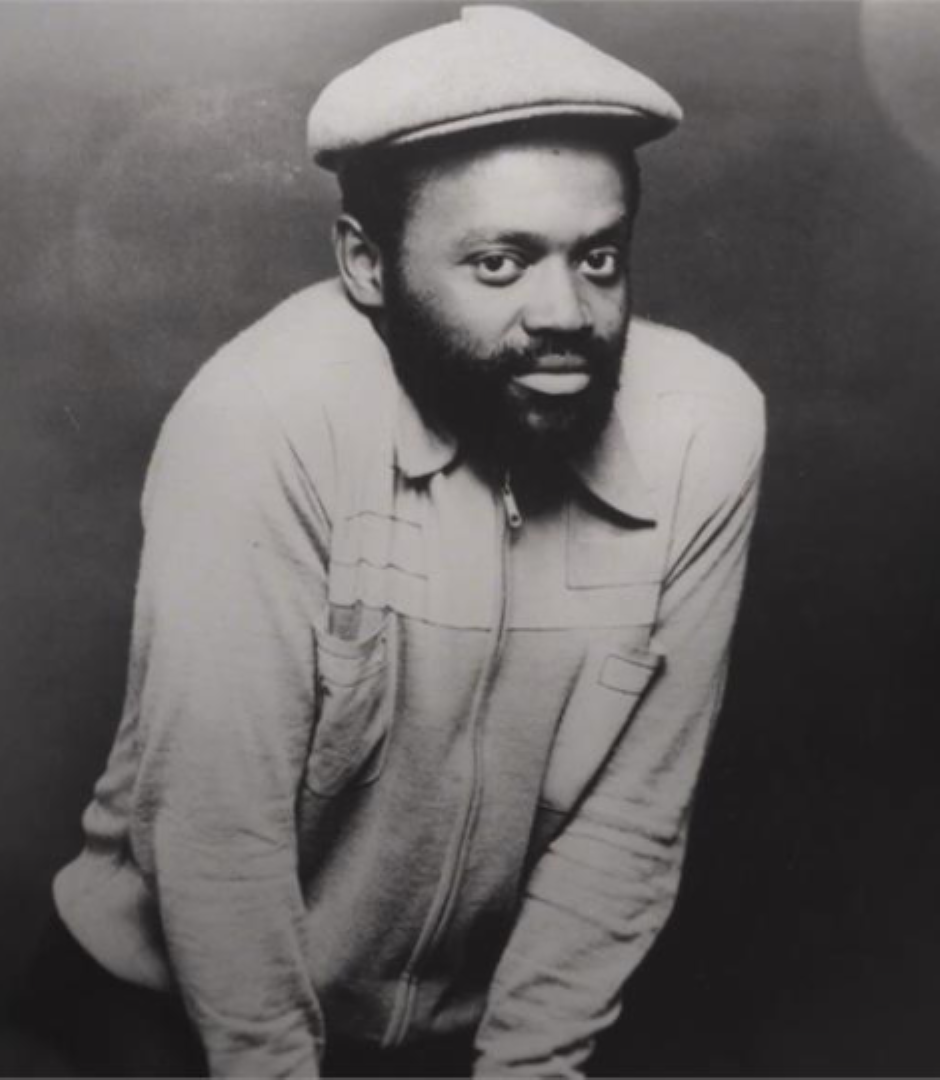
Last month I veered off course to write about The Temptations instead of a subject I’d researched and intended to talk over with you. So, this time, I’m sticking to the script to reflect on Carl Bean, singer of “I Was Born This Way” who worked his way through life to become an energetic minister and HIV/AIDS activist, against a backdrop of racism and homophobia. His life was one of determination and devotion.
First things first though. Founder of the Tamla Motown Appreciation Society and pioneer of black/deep soul music over here, among other things, Dave Godin groaned that promoting a gay singer was a real marketing challenge (in the seventies) and based this on personal experience, having worked on American singer Valentino’s “I Was Born This Way” with little success. “I was advised by a staff writer at Blues & Soul (where Dave was a much valued regular contributor) not to review the record because if I did everyone would think I was queer…I thought, everyone thinks I am anyway, so what’s the odds. Besides, it was a bloody good record.” Let’s investigate…..
“I Was Born This Way” was written by Bunny Jones, a heterosexual, with lyrics by Chris Spierer. Before hooking up with the music business, Bunny owned a string of beauty salons in Harlem, where, she said, most of her clients were gay. As her friendship with her customers grew, she became aware that they were suppressed by sections of society. “You hear of great designers or famous hairdressers, and that’s about as far as society will let gays go,” she told Christopher Stone from The Advocate in June 1975. “I particularly wanted [to call] the label Gaiee because I wanted to give gay people a label they can call home. If they’re really talented, I want to break my neck for them….I feel ‘I Was Born This Way’ may well become the international anthem for gay people all over the world (because) it’s a good foundation to stand on.”
Charles “Valentino” Harris recorded “I Was Born This Way” and was, his publicity blurb proudly announced, the first artist to ‘come out’ on record. “I didn’t tell a soul about it and I had a lot of friends who were in groups and they said ‘Wow! It’s just incredible.'” While he was pleased with the result, Valentino added, “I found things in the recording that I would love to be able to go back in and re-do, but then I didn’t know anything. I had just come back from doing a revival of Hair and it was all so new. It was my first time in the record business, and what it’s done to me personally has been very heavy, very weird (but) it’s been a trip.” Frankie Crocker of WBLS Radio in New York first played the single, resulting in an instant hit with listeners. And from that, word spread across the country, while in the UK it hit the top of the disco chart.
Using her car as a record store, Bunny sold around fifteen thousand copies of the single until Motown became interested in the distribution rights. “Berry Gordy kissed me on both sides of my cheeks and said ‘you’ve got a hit record’ and I felt like a million dollars…..No major company has ever had to deal with a gay protest record before….I’m sure that when Motown can readjust themselves to this type of record, they will make it a hit. They are the first major label to give a gay record this kind of support.”
When asked what reaction there was once the single was issued, Valentino replied, “I go in as a recording artist who did a record that had a statement that didn’t put anyone down. I’ve got to be me, and I don’t know what people are expecting after they’ve heard the record. But I can’t be anyone but me.” I’m not sure where this interview originated but think it could also be from the same edition of The Advocate – so my thanks to them.
Released on the distinctive red Gaiee label in April 1975, Valentino’s “I Was Born This Way” also soared to the top of the US disco listing, and was the only release on that imprint. (In much the same way as Chris Clark’s “CC Rides Again” was the solitary item on the Weed label) Outside clubland, sales struggled, probably due to the song’s content, so Motown lost interest. Two months later, the single carrying the Gaiee label design, was released in the UK, and the uphill struggle began as radio stations refused to touch it, although one presenter was blackmailed into giving it airtime. The story goes that Dave Godin had a regular guest spot on Andy Peebles’ Radio Piccadilly programme, when he would play a few of Dave’s personally chosen discs. “I went there this particular week and showed him the Valentino record. Andy said ‘I’m sorry, I can’t play that. It’s been banned, it’s overtly gay.'”
Totally incensed at Andy’s remarks, Dave retaliated by threatening if the single was banned, so was he. “It was brinkmanship, but it worked. Andy played the record. It was the only time it ever got played on Radio Piccadilly.” And it was this bigoted point of view that led to the commercial failure of the song, despite gay clubs across the UK prioritising it on a night’s playlist. “I have seen legions of heterosexual soul fans singing along to it. But I do wonder if Andy Peebles had said ‘Too bad, goodbye’, would he have announced the reason why over the air. I think he would have said something like ‘Dave Godin is difficult to work with’ and that would be the end of it. People often don’t see like it really is.”
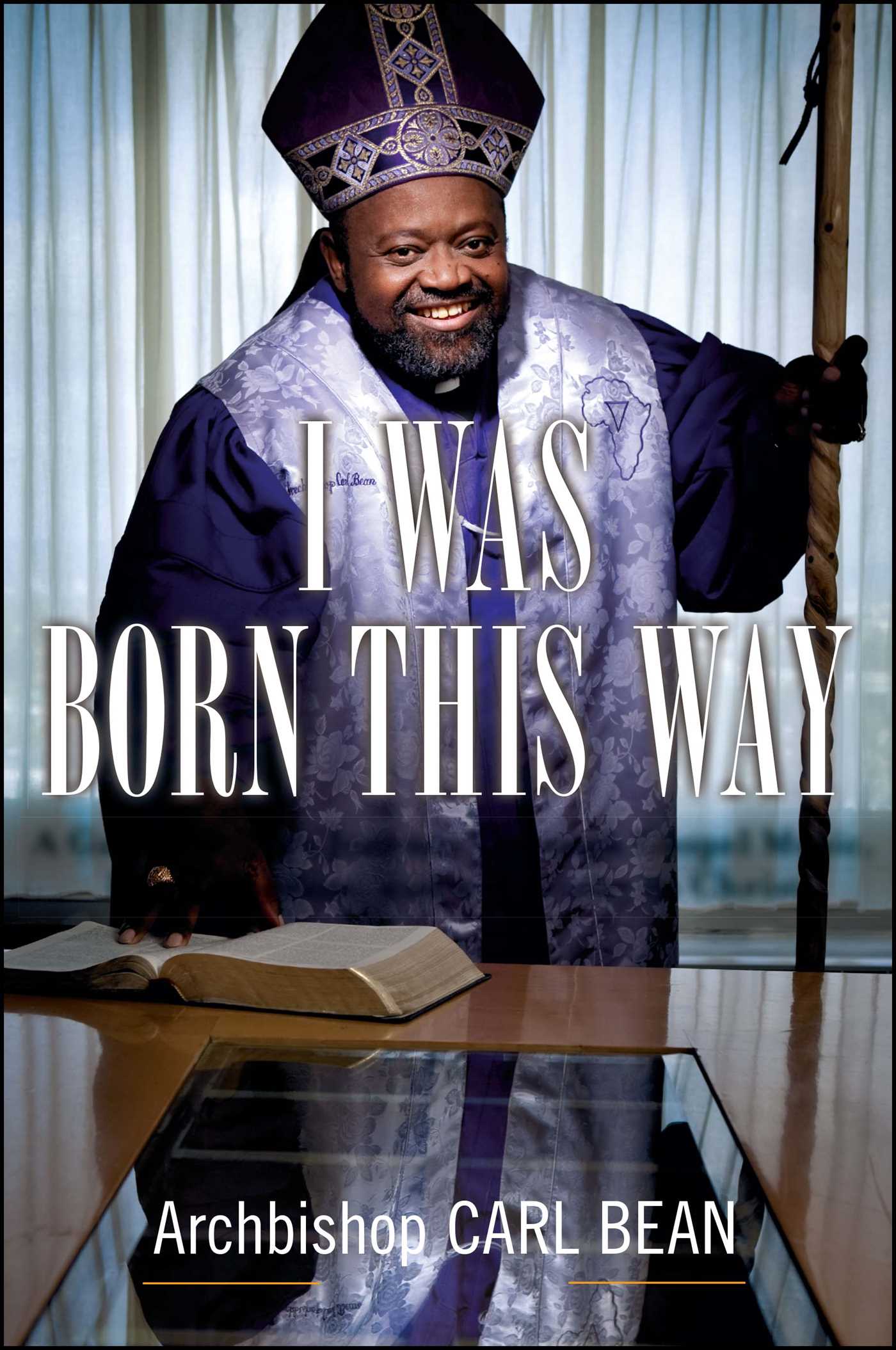 And this brings me to what I had planned to write about last month – Carl Bean’s book “I Was Born This Way”. Written by Carl with David Ritz, it was published in 2010, and I was introduced to it by dear John Lester who said it was a hard read in places because Carl had had an horrific upbringing. Well, John certainly wasn’t wrong. The fact that Carl survived to work tirelessly in later life for the liberation of LGBTQ people of faith, and in doing so helped many around the globe to find their way back to religion and spirituality.
Born on 26 May 1944 in Baltimore, Maryland, Carl’s upbringing was challenging, both emotionally and physically. For instance, he was taken to funeral parlours by his grandmother to watch as she styled hair on the deceased, at five years old he realised he was attracted to boys, and was handed around various family members. Being sexually abused became a way of life for this otherwise happy child, who was raised to obey adults: “The concept of going against an adult was forbidden. Yet this adult had just raped me.” The book is graphic but I think you’ll get the idea from the last sentence, so we’ll leave it there, and concentrate on Carl’s public life. He found solace, comfort and guidance in the Church, but he wrote, when he read the Bible, realised he was an outsider due to his same-sex orientation. “Jesus himself was an outsider…How could I not see Him as my salvation, my saviour from a world in which murderous prejudice had led to the enslavement of my people?”
With love in his heart, Carl was determined to be more than a mere follower. He founded the Unity Fellowship Church Movement in Los Angeles, a liberal protestant denomination welcoming lesbians, gays and bisexual. In 1982 he became an activist, working on behalf of people with AIDS in Washington DC and Los Angeles, which coincided with the alarming rise of the epidemic. Later he became involved with activists organisations that included co-founding the National Minority AIDS Council. The intention was to support young African-American men stricken with the disease. His work ultimately earned him the title of trailblazer, who used his music as a platform for activism, with a legacy that would inspire generations. His churches multiplied, and his ministry expanded, with Carl’s presence being requested for conferences and benefit events, hospital visits, officiating at funerals, and other pastoral duties. A House of Bishops was established to help him “And the culmination of our growth came….at a service at the National Cathedral in Washington DC, where I was consecrated archbishop….The service itself had all the diverse dynamics of our culture – African dances, glorious gospel music, fabulous preaching, and a church of worshippers filled with gratitude.”
Back to the music.
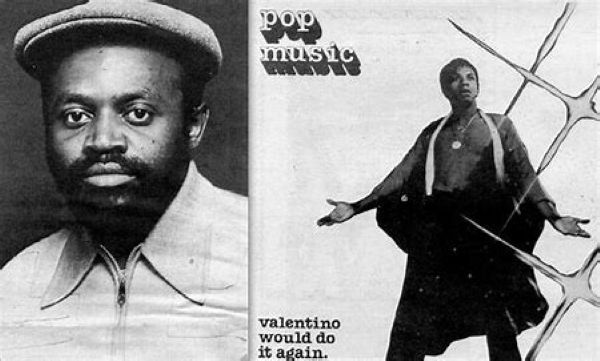 Motown may have turned its promotional back on Valentino’s “I Was Born This Way”, but when Bunny Jones later decided to re-record the song on Carl Bean with a more pronounced dance beat, the company jumped at releasing the revival, this time on the Motown label. In March 1978, Carl’s version was ‘outed’ and once again, the song’s mesmeric disco flair and inspiring by-line “I’m happy, I’m carefree and gay” was welcomed back in nightclubs. And with the occasional, cross-over radio airtime, the single soared into a top disco track. Motown folk were thrilled, so much so they wanted to sign him for further recordings.
In his book, Carl had a different version of how he came to record the song. Berry Gordy’s sister Gwen wrote to him saying she had this song she wanted him to record. Long-story-short, she invited him to her Los Angeles home and explained how she got to know about him. Berry had first heard the song in Lee Young Snr’s office at ABC, loved it so much that he recorded it on Valentino. “But that didn’t work,” Gwen said. “When Berry heard your voice, he said ‘Bean would be perfect. It’s a message song with a gospel feel. Bean will tear it up.'”
Once Carl agreed to record it, things moved pretty quickly as a production team that included Norman Harris and Ron Kersey was signed up, with Carl’s friends Estelle Brown and Myrna Smith [of The Sweet Inspirations] on support vocals. He wrote the recording session “happened in a blaze of light. The girls were brilliant, and I sang with every bit of strength and sincerity at my command. Ron was a wonderful producer. He gave us the freedom to take the song to church.” Then Tom Moulton added the final mix. “I had a hit. Gay people had a hit. But so did straight folks, who loved it as much as gays. The song became an anthem of liberation for everyone.”

Hitting the promotion trail was a must, and he smiled, if punters were expecting an artist in the colourful, flamboyant style of Sylvester who’s “You Make Me Feel (Mighty Real)” took the world by storm, they were in for a huge disappointment. “Whatever they were expecting, I think they were surprised to see me in a leather bomber jacket and a Donny Hathaway-style cap. It was a masculine look and, for disco, I sang with an especially masculine sound.” While he received (and accepted) mixed reactions, he was appalled that at some clubs he walked into, racial incidents which weren’t of his making.
When Carl signed with Motown, he wanted his group Universal Love to be included. Berry said they wanted his voice, not his group, so he signed as a soloist. However, on selected club dates, he used them as his backing group. The more he mingled with his public, the more powerful he became, and through this he was able to spread the word of God’s love for all. “I loved the experience, not only because I was making good money for the first time in my life, but because I was spreading love with a message of hope.”
Towards the end of the single’s life, Gwen Gordy, Berry’s niece, made contact. She wanted him to work on his next project with Iris Gordy (Fuller’s daughter) and Hal Davis, a mega-talented guy responsible for, among other artists, a handful of the Jackson 5’s hits. Carl was unimpressed, writing “His recording sessions were more about partying than music. His manner was harsh and his supervision heavy-handed. I told Iris, ‘I can’t work with this man.'”
She accepted this, but steered Carl in another direction by saying there was a new song with David Ruffin’s name on it ready to go. All it needed were the lead vocals. Perfect for Carl, she urged. David was experiencing some huge personal problems and Berry had lost patience with him. So he suggested Carl. “The track was smoking-hot R&B, and the lyrics were all about love and sex between a man and a woman.” He told Iris the song wasn’t for him, citing that the publicity surrounding “I Was Born This Way” was a hard sell on him being a gay man. “So for me to start singing love ballads to women made no sense.” Carl walked away from Motown. And the rest is history.
A couple of things before bringing this to a close. Lady Gaga confirmed she was inspired by Carl’s version to record “Born This Way”. “His early work was in 1975” she said. “Eleven years before I was born.”
 Carl wasn’t Motown’s only openly gay singer. Remember the group Dynamic Superiors? Of course you do. Their lead singer, (the late) Tony Washington was a flamboyant gay man, often wearing make up and dressing in drag on stage. Motown neither encouraged, nor discouraged, his appearance.
After a lengthy illness, Archbishop Carl Bean made the ‘transition to eternal life’ on 7 September 2021. He was seventy-seven.
Sharon Davis
A Personal PS from David Nathan, SoulMusic.com founder: “I am so glad that Sharon wrote this ‘Motown Spotlight’ about my dear friend Carl Bean. I first spoke with him in March 1978 around the time of the release of “I Was Born This Way”. Some years later, when I moved to Los Angeles, we reconnected in 1985 when Next Plateau Records re-issued it in the US and it was licensed to Ten Records in the UK. As I recall, I spoke with then-Reverend Carl Bean just as he was starting The Minority AIDS Project (MAP) as an outreach of Unity Fellowship Church. In the years that followed, I was a regular congregant at Unity Fellowship in L.A., sang in the choir and developed a lasting and precious friendship with Carl. He was an incredible human being, a true pioneer and Sharon’s article is a potent reminder of the difference he made. Ever grateful.